how burial containers and other funeral goods are priced, sold and regulated when a family is arranging a burial or cremation
Standing in a selection room, here's what separates the low end from the high end
Gauge, species, joinery and gaskets explained in physical terms, so you can tell which casket upgrades change something and which stop making a measurable difference.
Stellwagen Charter Boats
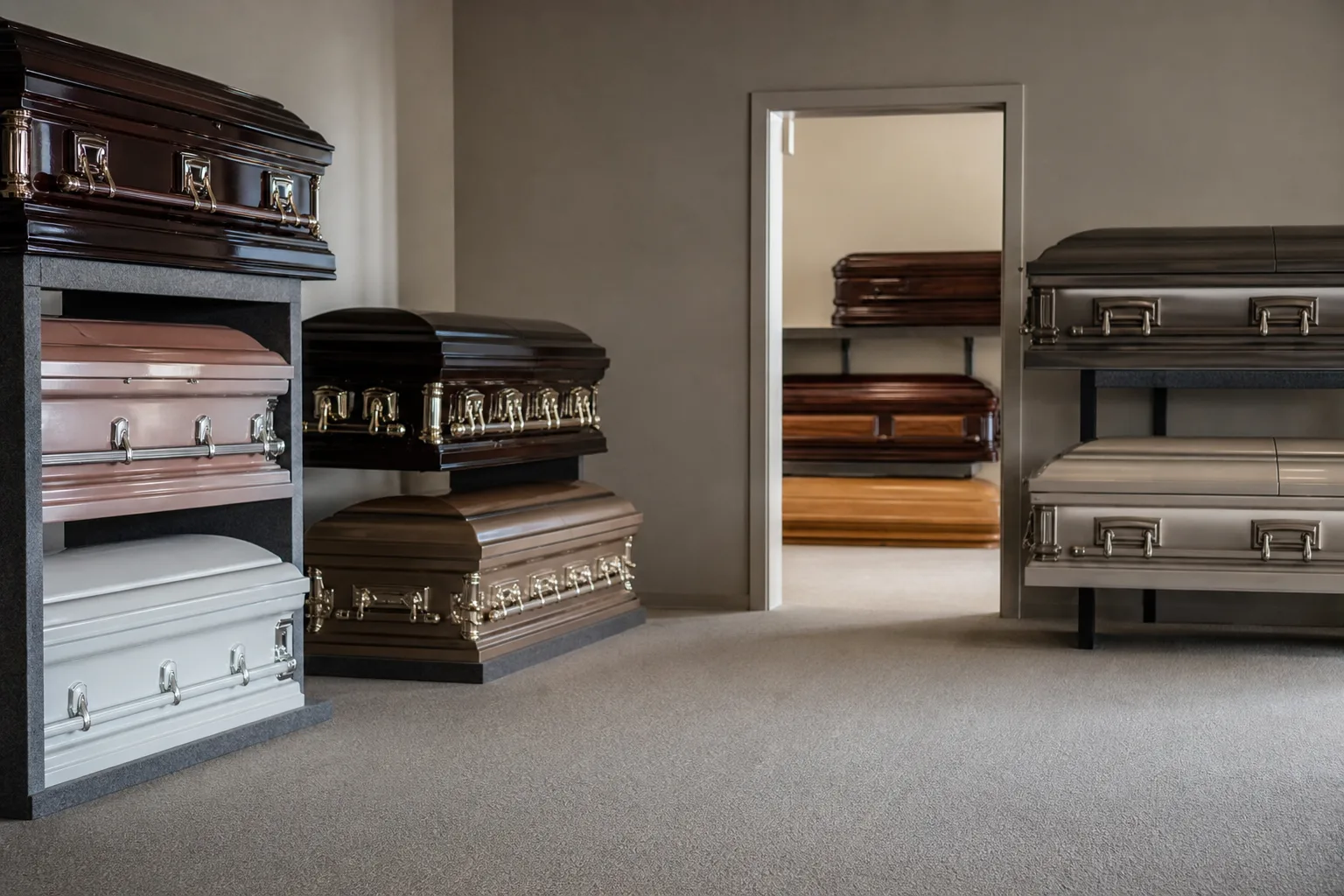
A selection room is arranged to be walked in one direction, from the modest end toward the expensive end, and the physical differences between the two ends are real but smaller and stranger than the price spread suggests. Some of what you are paying for is measurable with a caliper. Some of it is finish work you can see under good light. And some of it is a claim about what happens after the grave is closed, which is the part worth slowing down for. Here is how to read the room by what the boxes are made of.
Steel, and what the gauge number is telling you
Gauge runs backward: the higher the number, the thinner the sheet. A 20-gauge casket is thinner steel than 18-gauge, which is thinner than 16, and each step up adds weight, rigidity and cost. The jump from 20 to 18 is noticeable if you press a palm on the lid and watch for flex; the jump from 18 to 16 is noticeable mostly on the scale. Stainless steel sits above all three and resists corrosion better, and copper and bronze, which are sold by weight in ounces per square foot rather than gauge, sit above that. All of them are still sheet metal formed over a frame.
Wood, where the species is only half the story
Poplar and pine are the inexpensive hardwood and softwood choices, oak and maple sit in the middle, and cherry, walnut and mahogany occupy the top of most wood lines. Species affects price, grain and weight, but so do two things nobody points at: whether the panels are solid lumber or veneer over a substrate, and how the corners are joined. A solid mahogany casket with mitered, glued and pinned corners is a different object from a mahogany-veneered one, and the price lists rarely say which you are looking at. Ask. Then look at the inside of the lid, where the construction usually shows itself.
What a gasket and a sealing bar actually do
A gasketed casket has a rubber or synthetic strip running the perimeter of the rim, compressed by a locking mechanism that a crank or key tightens down. It resists the entry of outside water and air for some period of time. It does not preserve a body, and no seller is permitted to tell you it does. The Federal Trade Commission, which oversees how funeral goods are described and disclosed to families, treats preservation claims about sealed containers as off limits, and reputable firms are careful about the wording for exactly that reason. Underground, a sealed container also traps what is already inside it, which is why the word protective on a price list means resistant to water entry and nothing more.
Where the extra money stops changing anything
Past a certain point the upgrades are aesthetic, and that is a legitimate reason to buy them, but it should be a conscious one. Moving from 20-gauge to 18-gauge steel buys you a sturdier box. Moving from 18 to 16 buys you weight. Velvet interiors, adjustable bed hardware, swing bar handles with heavier castings, a hand-rubbed finish, a memory drawer, an embroidered cap panel: all of these are visible in the room, for a few hours, to the people who come. None of them changes anything about what happens after the vault lid goes on. If the open time matters to your family, buy the finish. If it doesn't, the money has other places to go.
What a careful reader checks before deciding
Start with the printed casket price list, which you are entitled to see and to keep, and read the descriptive line for each model rather than the name. Look for the gauge or the metal weight, the word solid or the word veneer, and whether gasketed appears at all. Then compare two adjacent models and find the single physical difference that accounts for the gap between them; often there is exactly one, and often it is the gasket or one step of gauge. Lift a lid yourself. Press the rim. Ask what the cheapest model in the line is, including the ones not on display, because there is usually at least one.
The useful skill here is not knowing which casket is best. It is being able to point at two boxes eleven hundred dollars apart and say out loud what the eleven hundred dollars is made of. Once you can do that, the room stops steering you, and the decision goes back to being yours.